Your organisation doesn't have a talent problem. It has a system problem.
Jun 01, 2026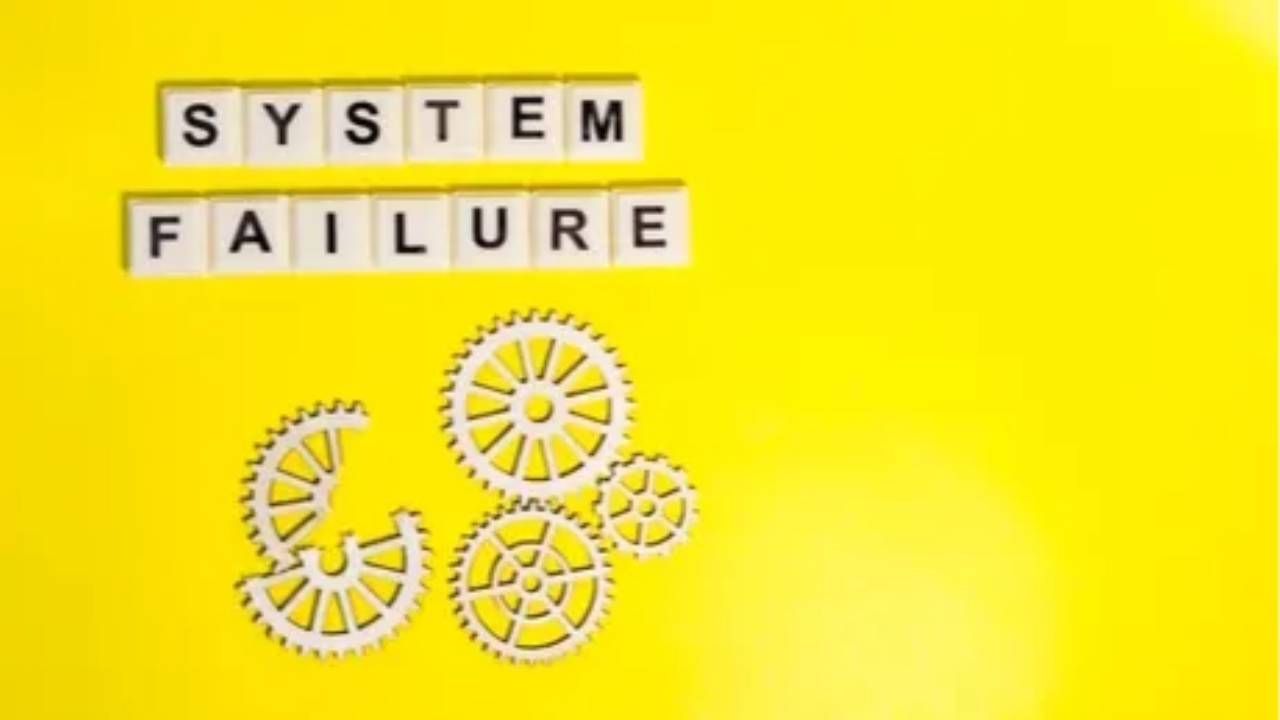
Most executive teams have spent the last three years diagnosing a talent problem.
Talent shortage. Skills gaps. Pipeline weakness. Retention crisis.
These diagnoses are not wrong. But they are incomplete - and that incompleteness is expensive.
When you treat a system problem as a talent problem, you keep solving for the symptom.
You invest in attraction, development, and retention programmes.
You build pipelines.
You run engagement surveys.
You redesign the EVP.
And the problem persists. Because the system is still broken.
This is the pattern I have spent 20+ years watching from the inside - across talent acquisition, people strategy, and organisational design at some of Australia's most recognised organisations.
The talent crisis is real. The misdiagnosis is more common than most boards are willing to admit.
1. What a system problem looks like from the outside
System problems are easy to misread because they present as people problems.
You see:
- leaders burning out or exiting shortly after promotion
- high performers quietly disengaging
- recruitment cycles that never seem to close the gap
- capability programmes that don't stick
- culture initiatives that generate enthusiasm and no change
These are not individual failures. They are system signals.
The system is telling you something about its own design - about the conditions it creates, the loads it places on people, and the outcomes it is structurally capable of producing.
Most organisations read these signals as: we need better people.
The more accurate reading is: we have a system that cannot reliably produce the conditions for performance.
2. The three structural causes most organisations overlook
Load without redesign
Organisations have dramatically increased the scope, complexity, and cognitive demand of leadership roles over the last decade - without redesigning those roles.
The result: roles that are structurally unsustainable. Capable people stepping into them, absorbing the load, and either burning out or exiting. The organisation then concludes that the person was not ready. The role, and its design, is never questioned.
Signal distortion
The way organisations identify, assess, and recognise performance has not kept pace with how performance actually happens.
Visibility is rewarded over contribution. Confidence is read as capability. Presence in the room is confused with decision quality.
This creates a reinforcing loop where the people most skilled at performing the signals of leadership are promoted - and the people most skilled at the actual work of leadership are overlooked, overloaded, or exit.
Governance that governs too late
Boards and executive teams typically engage with people and system risk after the signal has become undeniable - after the leader exits, after the team fractures, after the capability gap becomes a performance gap.
By then, the system has been degraded for months or years.
Effective governance is not retrospective. It reads leading indicators. It interrogates system design before individual outcomes.
3. The reframe that changes everything
There is one question that separates organisations with sustainable performance from those in permanent talent crisis:
"Can our system produce and sustain the performance we need - under the conditions we are operating in, and the conditions we are heading into?"
Not: "Do we have the right people?"
That question places the system beyond scrutiny. It keeps the organisation solving for inputs - talent, skills, capability - rather than for the conditions that determine what those inputs can produce.
When you ask whether the system can sustain performance, the diagnosis changes entirely:
- from individual readiness → to structural capacity
- from pipeline depth → to system design
- from retention tactics → to conditions for sustainability
- from engagement scores → to system health signals
The talent is often there. The system is often the constraint.
4. What this means for CHROs and their boards
The CHRO role is undergoing a fundamental shift - from talent custodian to system architect.
The organisations navigating this well are not just building better pipelines. They are designing better systems. They are asking harder questions at governance level:
- Where is load accumulating without redesign?
- Where are our signal systems producing distorted outputs?
- Which roles are structurally unsustainable - and what is it costing us?
- Where is informal authority compensating for weak system design?
- Are we building capability for the organisation we have - or the one we need?
These are not HR questions. They are organisational risk questions. And they belong on the board agenda.
The organisations that will perform over the next decade will not be those with the largest talent budgets.
They will be those that stop asking who and start asking why — and design systems capable of producing sustained performance, not just sourcing it.
J x.
The Human Systems LabTM works with Boards, CEOs, and CHROs to diagnose system-level people risk and design organisations built for sustained performance. Get in touch — or explore System SignalsTM, our diagnostic framework for organisational system health.
Stay connected with news and updates!
Join our mailing list to receive the latest news and updates from our team.
Don't worry, your information will not be shared.
We hate SPAM. We will never sell your information, for any reason.
